
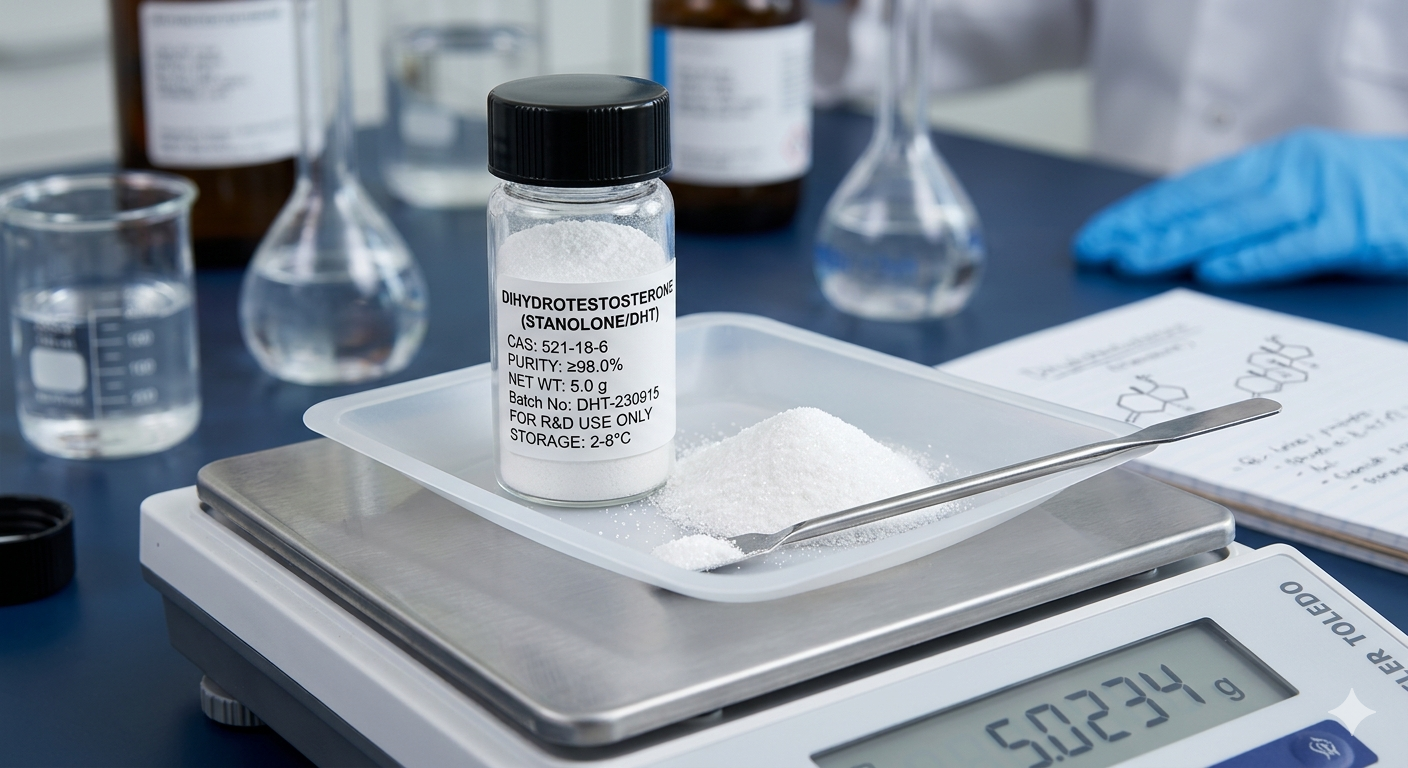
Dihydrotestosterone (Stanolone/DHT) Powder
Dihydrotestosterone, commonly abbreviated as DHT and also known as Stanolone, is a naturally occurring androgen and an important metabolite of testosterone. DHT belongs to the class of steroid hormones known as androgens and is produced when testosterone is converted by the enzyme 5-alpha-reductase.
Dihydrotestosterone has attracted considerable interest in biochemical, endocrinological, pharmaceutical, and laboratory research because of its strong interaction with the androgen receptor. Unlike testosterone, DHT cannot be converted into estrogen through aromatization. Its biological activity and metabolic pathways make it an important compound for researchers studying androgen signaling, steroid metabolism, receptor activity, and endocrine physiology.
Dihydrotestosterone (Stanolone/DHT) Powder refers to DHT supplied in powdered form for qualified laboratory and research applications. The physical form allows researchers to work with a defined chemical material when conducting analytical, formulation, or biochemical investigations.
What Is Dihydrotestosterone?
Dihydrotestosterone is an androgenic steroid derived from testosterone. It is generated naturally in the human body when testosterone undergoes enzymatic conversion by 5-alpha-reductase.
DHT is particularly relevant to research involving androgen receptor signaling because it has a high affinity for the androgen receptor. When DHT interacts with androgen receptors, it can influence downstream biological signaling associated with androgen-responsive tissues.
From a chemical perspective, DHT and testosterone are closely related steroid compounds but are not identical. The distinction is important when discussing laboratory research because their molecular structures, metabolism, receptor interactions, and biological properties differ.
DHT is commonly identified using names including:
- Dihydrotestosterone
- 5α-Dihydrotestosterone
- 17β-Hydroxy-5α-Androstan-3-One
- Stanolone
- DHT
Researchers may use these names interchangeably depending on the scientific, analytical, or regulatory context.
DHT and Testosterone: What Is the Difference?
DHT is derived from testosterone, but it should not be confused with testosterone itself or with testosterone esters.
Testosterone can be converted into DHT through the action of 5-alpha-reductase. This biochemical pathway is one reason DHT is frequently studied alongside testosterone in endocrine and steroid research.
Testosterone can also undergo aromatization to form estradiol. DHT follows a different metabolic pathway and is not aromatized into estrogen.
This distinction makes DHT particularly useful as a research compound when scientists are investigating androgen-specific pathways without directly examining aromatization.
Key Differences
Testosterone: A primary androgen hormone that can undergo both 5-alpha-reduction and aromatization.
Dihydrotestosterone (DHT): A more reduced androgen formed from testosterone through 5-alpha-reductase and characterized by strong androgen-receptor activity.
Testosterone esters: Modified forms of testosterone that are used in pharmaceutical formulations and have different pharmacokinetic properties.
Understanding these distinctions is important for accurate scientific communication and product identification.
Research Applications of Dihydrotestosterone
DHT is primarily of interest in research involving androgen biology and steroid metabolism. Laboratory investigations may examine DHT in areas such as:
Androgen Receptor Research
DHT is widely studied in connection with androgen receptor signaling. Researchers can investigate how androgen-receptor activation influences cellular pathways and gene expression.
This makes DHT relevant to laboratory studies involving androgen-responsive cells and molecular biology.
Steroid Metabolism Research
Because DHT is produced from testosterone through 5-alpha-reductase, it is an important compound for studying steroid metabolic pathways.
Researchers may examine the conversion of testosterone to DHT and investigate the enzymes and biological processes involved in androgen metabolism.
Endocrinology Research
DHT is relevant to studies of endocrine signaling and androgen physiology. Researchers studying the relationship between testosterone, DHT, androgen receptors, and other steroid hormones may use DHT as an analytical or experimental reference compound.
Biochemical Research
DHT may also be investigated in biochemical studies involving receptor binding, steroid pathways, molecular signaling, and androgen-responsive biological systems.
Analytical Research
Analytical laboratories may study DHT using techniques such as chromatography and mass spectrometry. These methods can help researchers identify, characterize, and quantify steroid compounds in controlled laboratory environments.
Chemical Characteristics of DHT
Dihydrotestosterone is a steroid compound with a molecular structure closely related to testosterone. Its chemical structure contains the characteristic four-ring steroid nucleus found in many steroid hormones.
One important structural difference between testosterone and DHT involves the A-ring. The conversion of testosterone to DHT through 5-alpha-reductase changes the molecular configuration and affects its interaction with the androgen receptor.
For researchers, accurate chemical identification is essential when selecting a reference material or analytical compound.
Product documentation should therefore be reviewed carefully for information such as:
- Chemical name
- Synonyms
- Molecular formula
- Molecular weight
- Purity specification
- Analytical documentation
- Batch identification
- Storage information
- Certificate of analysis, where applicable
DHT Powder for Laboratory Research
Powdered DHT may be supplied as a research material intended for qualified laboratories and analytical applications. Researchers should establish appropriate handling, storage, identification, and documentation procedures before working with steroid compounds.
The appropriate laboratory environment depends on the intended analytical or experimental application. Research organizations should follow their institutional safety procedures and applicable regulations.
DHT should not be represented as a general-purpose nutritional ingredient, dietary supplement, or cosmetic ingredient without appropriate regulatory and scientific justification.
Quality Considerations for Research Compounds
When evaluating a DHT research material, researchers generally benefit from reviewing the available quality documentation.
Important considerations can include:
Purity
Purity is an important specification for analytical and biochemical research. Researchers should review the stated purity and understand which analytical method was used to establish it.
Certificate of Analysis
A Certificate of Analysis (COA) can provide batch-specific information and may include analytical results, identification information, purity measurements, and other specifications.
Batch Information
Batch or lot identification helps laboratories maintain traceability and document which material was used during an experiment.
Storage Conditions
Steroid research compounds should be stored according to the supplier’s documented requirements and the laboratory’s internal procedures.
Product Identity
Researchers should verify that the chemical identity, nomenclature, and documentation correspond to the intended compound. DHT should not be confused with testosterone, testosterone esters, or other androgenic steroids.
Frequently Asked Questions About Dihydrotestosterone Powder
What is Dihydrotestosterone (DHT)?
Dihydrotestosterone, or DHT, is an androgenic steroid hormone produced naturally from testosterone through the action of the enzyme 5-alpha-reductase. It is widely studied because of its interaction with the androgen receptor.
Is DHT the same as testosterone?
No. DHT is chemically related to testosterone and is produced from testosterone, but the two compounds are different. DHT has a different molecular structure and biological activity.
What is Stanolone?
Stanolone is another name for dihydrotestosterone. The terms DHT, dihydrotestosterone, and stanolone may therefore refer to the same chemical compound.
Is DHT a testosterone ester?
No. DHT is not a testosterone ester. Testosterone esters are chemically modified derivatives of testosterone, whereas DHT is a reduced metabolite of testosterone.
Why is DHT studied in laboratories?
DHT is studied because of its importance in androgen receptor biology, steroid metabolism, endocrine research, biochemical signaling, and analytical chemistry.
What documentation should researchers request?
Depending on the application, researchers may review a Certificate of Analysis, purity information, batch or lot identification, chemical identity, and applicable safety documentation.
How should DHT research material be handled?
Handling should follow the applicable laboratory safety procedures, institutional requirements, supplier documentation, and relevant regulations. Researchers should use appropriate protective and containment procedures for their laboratory environment.
Dihydrotestosterone (Stanolone/DHT) Research Summary
Dihydrotestosterone is an important androgenic steroid and a biologically active metabolite of testosterone. Its strong relationship with androgen receptor signaling makes it a valuable subject for research into steroid hormones, endocrine biology, receptor activity, and metabolic pathways.
For laboratories and researchers, accurate identification and reliable documentation are essential when evaluating DHT powder. The compound should be clearly distinguished from testosterone and testosterone esters because these materials have different chemical structures and biological characteristics.
Researchers considering DHT for laboratory applications should evaluate the compound’s identity, purity specifications, batch documentation, analytical data, storage requirements, and applicable regulatory considerations.
Important Research-Use Notice
Dihydrotestosterone (Stanolone/DHT) Powder should be treated as a research and laboratory material where legally permitted. It is not intended to be presented as a dietary supplement, general consumer product, or recommendation for human use. Researchers and organizations are responsible for complying with applicable laws, regulations, laboratory procedures, and safety requirements.


Reviews
There are no reviews yet.